Evaluating Data Needs for 3pl Audit Software
Picking 3pl Audit Software requires more than contrasting attributes. Businesses ought to initially figure out whether a system can accept, arrange, and validate the functional and invoicing info that forms their logistics expenses.
A valuable analysis begins with the information currently created by service providers, storage facilities, transportation management systems, enterprise source preparation platforms, and 3PL companions. Understanding those resources aids groups determine compatibility spaces before application.
FreightOptics markets 3pl Audit Software.
Beginning With Operational Information Resources
Operational info supplies the context required to assess whether a cost matches the service that was requested and supplied. Pertinent records may consist of shipment days, origin and destination places, service levels, bundle or pallet information, weights, measurements, tracking identifiers, shipment status, accessorial events, and storehouse task.
Businesses ought to examine exactly how this information is stored and exchanged. Some partners may provide structured files, while others make use of system combinations, websites, or standard electronic files. During analysis, verify whether the software can bring these resources together without calling 3pl Audit Software for extensive manual prep work. It must also preserve crucial identifiers so delivery, order, billing, and shipment records can be linked precisely.
Take A Look At Billing and Contract Information
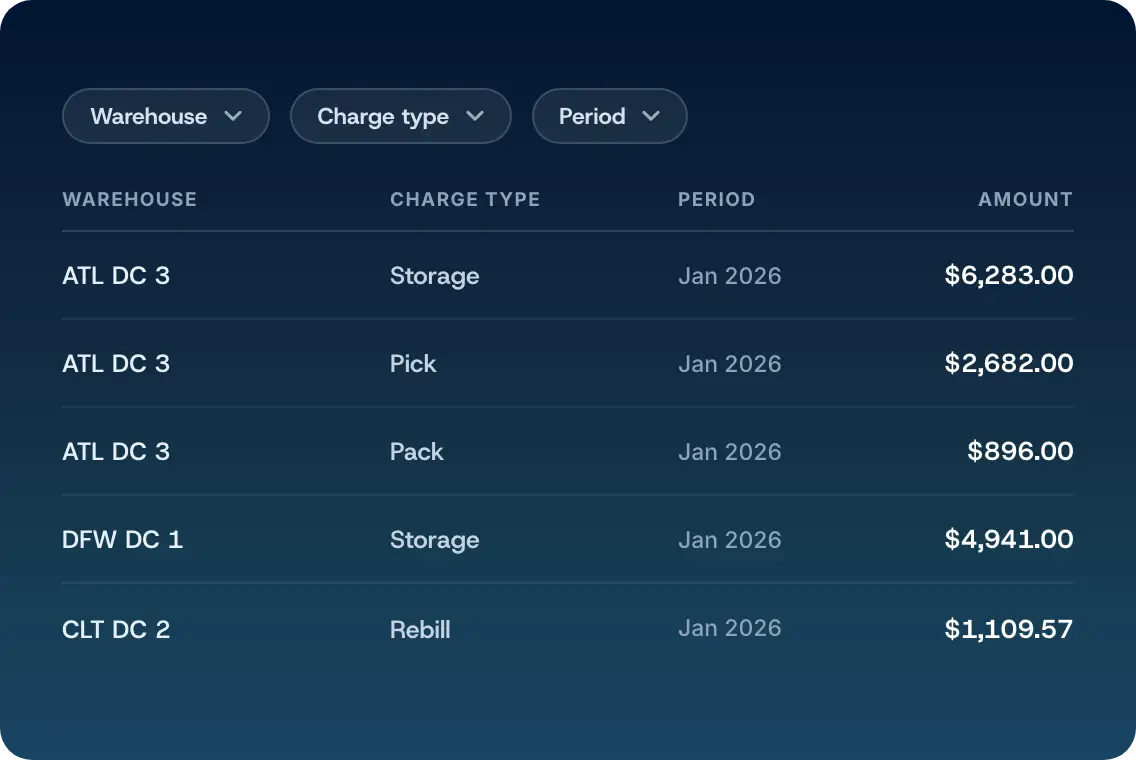
Payment information is main to an audit because invoices have the quantities that need to be tested. Important areas can consist of invoice numbers, billing days, shipment referrals, billed services, base transportation costs, gas charges, accessorial fees, taxes, credit ratings, changes, and settlement standing. For warehouse and satisfaction task, organizations may also require storage space, managing, pick-and-pack, obtaining, returns, and special service fee.
Contract and price information deserves equivalent focus. A system might require to evaluate discussed prices, minimum charges, dimensional regulations, gas timetables, zone meanings, additional charge conditions, money requirements, and effective dates. Ask just how these terms are represented and kept, particularly when arrangements vary by service provider, client, center, lane, or service kind. Clear support for versioned rules can help make certain a billing is examined versus the terms that applied when the service took place.
Assess Data Quality and Matching Needs
Also capable audit software application depends on reliable source information. Evaluation teams need to take a look at replicate documents, missing out on monitoring numbers, inconsistent address styles, contrasting weights, unit distinctions, insufficient accessorial codes, and date or time-zone variances. They must additionally recognize which fields are mandatory for matching invoices to deliveries, orders, agreements, and proof-of-delivery info.
A strong examination includes representative examples instead of just clean test data. Usage common shipments, exceptions, returns, global movements, multi-package orders, and billings consisting of credit ratings or challenged charges. This exposes whether the system can determine relationships throughout records and clarify why a cost was accepted, flagged, or denied.
Take Into Consideration Coverage, Controls, and Information Access
The value of audited information expands beyond locating private discrepancies. Services may need recaps by service provider, center, consumer, service level, lane, delivery type, or billing duration. They may likewise want to differentiate recoverable mistakes from legitimate fees and keep track of persisting problems. Confirm that the software can provide beneficial coverage while keeping the transaction-level information needed for testimonial.
Data accessibility and administration should belong to the assessment too. Review individual approvals, audit histories, export alternatives, retention techniques, and the capacity to file choices or corrections. These capacities sustain collaboration amongst logistics, finance, purchase, and operations teams without losing the initial record or the thinking behind a modification.
Construct an Examination List
Prior to choosing a platform, create a checklist that maps each required data source and field to a service purpose. Include functional events, billings, price contracts, account frameworks, exception codes, and reporting requirements. Tape-record the expected format, update regularity, responsible proprietor, and any makeover required before the data can be made use of.
FreightOptics offers 3rd Event Logistics Audit services, and its 3pl Audit Software can be thought about alongside the company's current systems, companion demands, and audit procedures. A concentrated testimonial of information demands assists organizations select software that fits their functional setting and supports regular, explainable payment analysis.
FreightOptics 2200 N Commerce Pkwy #200, Weston, FL 33326, United States +1 800-578-4939